Have any of you seen the Redrawing The Balance video, above? It was done by the Education and Employers Inspiring the Future program a couple of years ago.
When I first saw it, and thought about the magnitude of the message, and the scale of the mountain to climb, I genuinely found it quite overwhelming. It brought me to tears the first time and has every time that I’ve watched it since (watching at work warning…). I don’t want to ruin the ending – click on the image below and take a minute to watch it. Try to notice what comes up for you as they go through the discussion.
…

…
Have you watched it? Powerful, right? For those of you that haven’t seen it, or just want to get on with reading, here’s a summary of the video. SPOILER ALERT: A group of children was asked to draw a picture of a firefighter, a fighter pilot and a surgeon. They were encouraged, using gender neutral language, to give their characters names, and to talk about what they were like. The children were then asked if they’d like to meet these people in real life, and were shocked to be introduced to women in these roles. 61 out of 66 pictures had been drawn as men.
I’ll admit that I was picturing males for each of these roles the first time I watched it, despite having great female role models in my own life and a lot of personal awareness of gender discrimination issues (or so I thought!).
Since first seeing this video, I’ve wanted to do something about it. I spent some time clicking on the videos that come up when you watch this first one (thanks algorithms) and found a brilliant campaign called Like A Girl run by Always, the feminine hygiene company. They have interviewed girls and women about what ‘like a girl’ means to them, creating an impactful video showing the difference for girls before and after puberty.

They take it further, describing what it means to be unstoppable. It reveals the experience as a girl in a very real way, and how girls at that turning point of puberty reflect on what it means to be told what they can be or do as a result of being a girl. They are from the US, but I expect the results would be similar here in the UK.
Closer to home
I have tried to raise my daughter to believe she can do anything, to use female pronouns instead of male pronouns (have you ever noticed the snail on the path is a ‘he’? The driver of the car in front is ‘that guy’?), to bring her on the women’s march and to show her that being a good person is more important than being pretty. But, surrounded by images of airbrushed women, the double standards of the expectations of the ideal woman (be strong, but not too strong, and independent, but not too independent, have a job, but be the perfect mother and do all the baking, etc), the gender pay gap, the intense marketing of the beauty and clothing industries – it never quite feels like enough.
As part of my masters, we are encouraged to take on a personal leadership challenge. Being often too time-pressured to volunteer for the PTA or other events as I’d like to, I saw this as an opportunity to engage with my daughter’s school. We’re encouraged to do something scalable, and since the school is part of the wider network of Harris Academies, there is an opportunity to roll this out within that group, if there is interest.
Getting started
We are incredibly fortunate with the school – still only in its fourth year, it has achieved an Ofsted Outstanding score (for non-Brits this is the holy grail – it has a huge impact on number of applications and even increases property prices in the neighbourhood), is a Unicef Rights Respecting School, has an excellent head teacher, and passionate and committed teachers and parents. This is all to say – I didn’t have concerns about specific issues, but research has shown the impact of unconscious bias, where subtly the stereotypes for boys and girls can be reinforced, even without intention. Even toy selection can determine future careers (Rowlatt, 2014). The results can be significant – recent research showed that girls as young as six believe genius is solely a male trait (Blewett, 2017).
I approached Ms Conduit, the head teacher, to discuss the idea. She highlighted steps that they take to avoid gender bias, such as including gender neutral toys, encouraging play suited to both genders (e.g. supporting risk-based play for all children, but can be particularly relevant to boys), encouraging all children to play with all dressing up costumes (e.g. girls can be firefighters too), etc. We discussed unconscious bias and I was lucky to be pushing on an open door. She is an inspiring leader and, instead of being threatened by the discussion, was very interested to see if there was more that they could do.
We devised an action plan, some of which is still in progress. But as a first step, we decided to try to re-create the situation in the video. We developed a briefing for staff, which Ms Conduit presented at a staff meeting. She shared the video, which brought some of the staff to tears, as it had for me. We decided to arrange the event for the 8th of March – International Women’s Day. Huge credit to Ms Conduit for her efforts in reaching out to local institutions to ask for participation in the event. I tried, and failed, to reach out to recruit a female scientist using contacts through friends, as it was a big ask to travel to south London which would involve taking half a day’s leave to attend. We ended up with commitment from a female surgeon, police officers and a professional footballer, and were looking forward to the day.
Jo briefed the staff, including a script to follow to ensure there were no accidental ‘he’ or ‘policeman’ type references when describing the exercise to the children. The plan was for the children to do the drawing on the Wednesday, then to have the assembly at the usual time first thing on the Thursday morning. Ms Conduit prepared an introduction for the assembly, and everything was set to keep the female professionals hidden until they walked into the hall to surprise the children.
Bump in the road
Then late Tuesday afternoon, Ms Conduit received an email from the football club letting us know that the professional footballer would not be able to attend. No explanation, just the information, and us left with no female athlete. I was especially excited about having a footballer because the only gender divide I’ve really actually observed at the school is in the participation in sports (e.g. nearly all the participants in the football after school club are male). Sports help to keep a girl’s confidence up through puberty, when it currently tends to plummet, and yet half quit playing by the time they are 17.
I have played hockey for many years, though stopped playing a few years ago due to time commitments. Hockey on the ice, that is, or ice hockey as it is called in the UK. I still have my equipment (and apparently some intention of going back to it, inspired by some former teammates who have gone back in their fifties!). We decided that if we couldn’t find a replacement, I would put my kit on and represent an ‘athlete’, and ask the children to draw that instead of a footballer.
With such short notice, we were indeed unable to find a replacement. So, I was up.
When Thursday morning arrived, I needed to take the equipment in the car, with my daughter, on the way to school. I said I was dropping it off for a friend, feeling a little guilty for the dishonesty. Circling around to the front of the school, and through a separate entrance to the children, I met up with the surgeon and the two police officers who were going to participate in the assembly. The surgeon and I got into our ‘costumes’ and waited in the head teacher’s office while the kids were ushered into the hall for the assembly. We discussed experiences that each of us have had in making it in traditional male roles. I felt like a bit of a fraud as I am (clearly…) not a professional athlete, but I comforted myself for having a bit of legitimacy due to many years in the heavily male-dominated fishing industry. One of the police officers had short hair and shared about her experiences of being asked about whether she was ‘a boy or a girl’ by students in some of the schools they have visited. For me, this emphasises the importance of children being exposed to different role models and experiences outside of traditional stereotypes, as promoted by the Education and Employers Inspiring the Future message. As they say, ‘Young people aspire to be what they see around them in their everyday life but it’s difficult to aspire to a future that you never see and don’t know exists.’ Children asking whether a police officer is doing more than trying to put someone into a box – they’re asking about the possibilities of the world that they live in, to understand whether there are rules about this particular job, and therefore, how it affects them.
Anticipation
As we waited out of sight, Jo was presenting an introduction to International Women’s Day, and talking about just this point – whether there were jobs specifically for men or women. For us, the anticipation was building and it was getting very hot in the tiny office, especially for me in full hockey kit (the others were very polite to not mention the increasingly noticeable scent of my kit as the room warmed up).
The big reveal
We were finally summoned to the hall and all filed in – the police officers were first, then me, then the surgeon. I saw many of their little jaws genuinely drop, and the wonder on their faces and near complete silence as we walked in was fairly overwhelming. Though this blog is making it sound like it, I’m not actually a big crier, yet I had to fight off tears as I thought about what an impact this could potentially make for these kids. I was also struck by their innocence and complete openness on their faces to whatever we were about to say. Every single one of them was watching us. I have presented a lot in my career, to large and small groups of all types of audience, but I can honestly say I have never felt the level of pure energy and engagement with an audience as I did in that moment. I was, again, struck by the importance of education and the way in which we continue to undervalue the role of teachers in our society.
And during all this, I was scanning for my daughter as well, to see how she was reacting to this twist of events. I couldn’t see her (all the faces!!) but eventually saw her skeptical face from right at the back – a mixture of confusion, pride, embarrassment and excitement. She later said to me that I had lied to her, with an understanding smile and the same mix of emotions. I think her brief celebrity helped her to forgive.

Ms Conduit asked us to introduce ourselves and talk about what we did. The surgeon introduced what she did in simple language, I talked about playing hockey and needing to keep fit and work as part of a team, and the police officers talked about their role in helping keep everyone safe. Jo shared that they had been discussing if there were any jobs that the children could think of that only men or only women could do, and they hadn’t identified any – even teaching in a girls school could be done by a man.
The children were invited to ask questions about what we did, and of course, in full kit including helmet, stick and skates, the first questions came to me. What was I actually? (it’s not the most popular sport in the UK…) How old was I when I started playing? Randomly one of the first questions was whether you could play ice hockey using an apple pie (presumably as the puck)? The joy of working with kids. Jo encouraged the children to ask questions of the other women, and they learned about cutting into people’s tummies to help make them better, how long it takes to become a surgeon, how the police stop bad guys and whether they work together or alone.
 At the end, we stood by the doors and the kids could ask questions about what we do as they filed out of the hall. To Shania Twain’s ‘Man! I Feel Like A Woman’. I kid you not. It was awesome. I answered some excellent questions about stick handling, skating, whether you can learn to skate without playing hockey and vice versa and why I had to wear the big gloves and all the kit. As a side note, I had grabbed a puck from my bag to complete the look, and had it on the ground next to me on the way out. It happened to have a Coca Cola logo on one side, and was one of the first things the children commented on, and, until I turned it over, was commented on by most of them. The power of branding and marketing to children…but that’s one for another day.
Girl power
Afterwards, we discussed the reaction. As a school, we are well set up to have ‘mighty girls’. It was a new school four years ago, so the oldest children in the school are eight, and have had less influence from those older than them as would happen in other schools. They are also likely to be only children, or be the oldest in their families, as if they had older siblings they would likely attend the same school as them. The class sizes of the Year 3 classes are around twenty, and the children there are very close, having played together from when they were four, with just 45 of them in the whole school in the first year. The parents of these first few years have taken a risk with a new school (until the Ofsted rating last year), so there may be something there about a cohort of parents willing to do things a bit differently. For example, I was thrilled to see that we had Mrs Santa’s Grotto as the feature at this year’s Christmas Fayre – showing not only creativity but female empowerment. The school also had author Suzanne Hemming present her book ‘She’s not good for a girl, she’s just good!’ to reception classes last year.
So, again, we’re very fortunate with the amazing school we have. And the results showed in the children’s drawings. One thing I loved about the drawings, despite it making them a little tricky to categorise, is that it’s clear that kids are not as hung up on gender as adults are. For many of the people drawn, there is no clear gender emphasised, and if a name was given, it is something like Bubble or Hobby – definitely not easy to mark as F or M for my analysis (NB: if I wasn’t sure I left it out). But it’s beautiful, and emphasises the messages given in the video – that at a young age kids don’t need the same labels as adults do. Why boys want to push baby buggies until they learn not to, and why girls like climbing and getting dirty until they learn it doesn’t make them look pretty or dainty.
Results
I digress. After the assembly, the children then went back to their classrooms and were asked to redraw the surgeon, the police officer, the athlete and we added a ballet dancer. The teachers had observed that many of the girls had drawn females for the original exercise, so we wondered about what the boys would draw for a role that is more traditionally considered female.
Here are the results from the analysis for the year three students – around the same age as those in the video. There are more boys than girls that participated in the year: 16 girls (38%) and 26 boys (62%). This looks like this:

Results for Year Three

So we saw increases in all of the careers, and all of them ended up with the same or at a higher percentage than compared to the percentage of females and males in the class. For the surgeon, it could be that their understanding of what a surgeon is became just ‘doctor’ in their minds (though it was explained), and many of the children have female GPs. For the athlete, we have a lot of sporty mums at the school and were in the throes of preparation for the school’s first fun run – led by women organisers.
Looking ahead
I also wonder, or frankly hope, that things may be changing, even from a couple of years ago when this video was made. The recent coverage of the Olympics in Pyeongchang seemed to have more coverage of women’s sports than I have noticed in previous years, which could also explain the higher proportion of athletes initially. But more broadly, since just two years ago, we’ve had a female prime minister elected, the Me Too movement and the gender pay gap legislation and associated reveals and changes. We’ve also seen the increased activism, with the response to the Brexit vote and Trump’s election, with women’s marches making up the largest global demonstration ever. We’ve celebrated 100 years since some women first won the vote in the UK, the Women of the World Festival has grown substantially every year since it began in 2010, with 20 events now taking place in five continents. The two volumes of Goodnight Stories for Rebel Girls are the most funded books in crowdfunding history.
So what does this all mean? As I’ve described, I think we do have a somewhat unique school. We discussed whether this might look different in different schools with different demographics and even with older children more in the mix. But as William Gibson noted – the future is already here, it’s just not very evenly distributed. These pockets will spread and grow and there will be setbacks, but ultimately, it feels like we are on a positive path. Let’s help encourage girls and boys to not accept limits, just because of their gender.
Inspired? Want to learn more? Here are some easy things you can do:
- Try to use gender neutral language when talking about jobs, birds in the sky or imaginary friends. Or just say ‘she’ sometimes. Or all the time.
- Watch some videos. There are many linked to above and summarised here.
- Learn about unconscious bias. We’re all biased, and it’s just part of being human. But it’s better when we’re aware of it.
- Listen to the Guilty Feminist podcast. It’s hilarious, and yet, educational. Win win. http://guiltyfeminist.com/episodes/
- Read Goodnight Stories for Rebel Girls. With your girls. And your boys. https://rebelgirls.co.uk/
- Come to the Women of the World Festival in March. http://wow.southbankcentre.co.uk/
- Report sexism when you see it, anonymously or otherwise. http://everydaysexism.com/
- Share this blog, or any of the references, with your child’s school.
- Talk about it. Ask questions. Disagree. But talk about it.
What else do you recommend? I’d love to hear your thoughts.


 “I’m a feminist, but…” starts each episode of the


 In logical terms, allowing companies to pollute or generate pollution, and not pay for the consequences, particularly in the energy sector, is simply bizarre (but has comparisons in many other scenarios where social and environmental costs are not paid by the business causing them). Compare this to the example of a company dumping chemical waste directly into a river – in most countries, this would result in a hefty fine and potentially, loss of the company’s license to operate. But contribute to climate change indirectly and in many countries, there is no consequence (possibly because the impact is less visible). In an upcoming post I might write about natural capital or a bit more about the background to externalities* (short description in the text box), but for now, we’ll press on.


 Because the most important thing to know about synthetic plastics is that once they’re made, they’re pretty much here to stay. They don’t biodegrade, but they do photodegrade, which means they turn into the micro-plastics referred to in the definition of a ‘novel entity’. Synthetic plastics can persist in the environment for over a thousand years, releasing toxins and
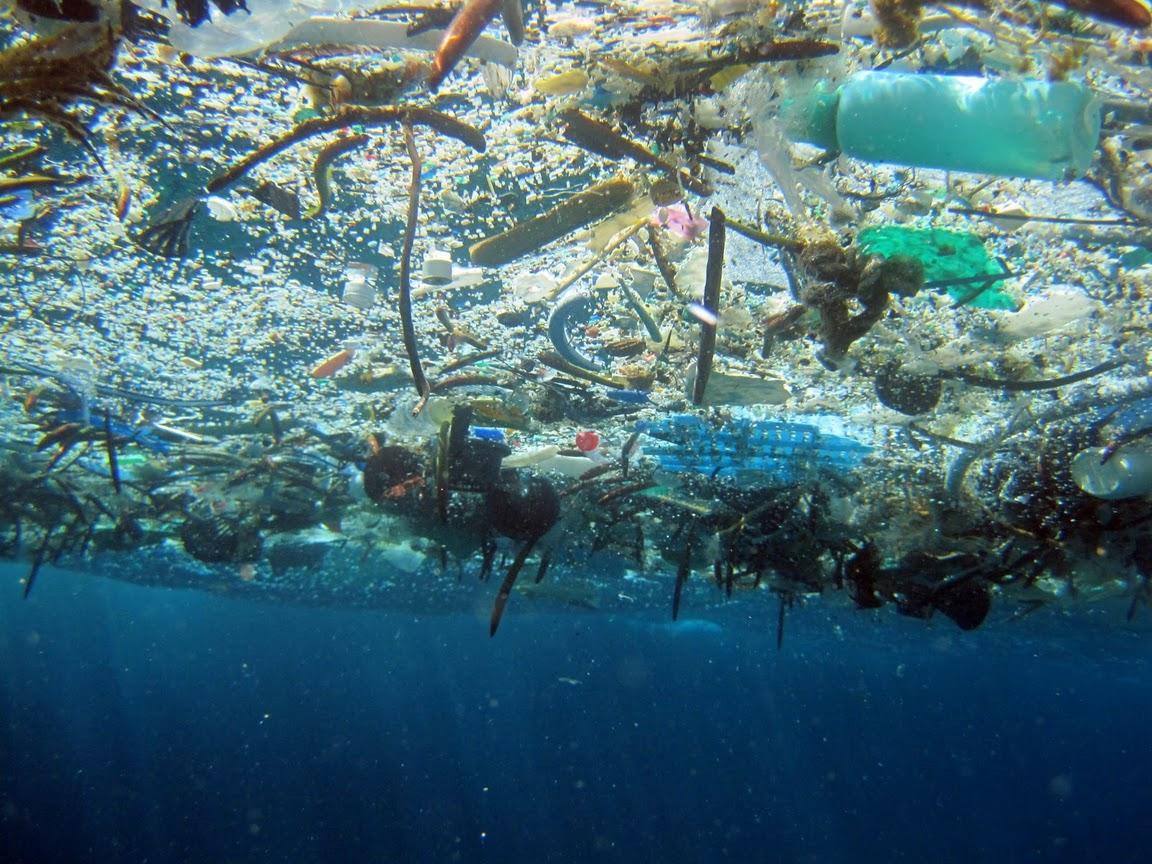 nd thrown away without a second thought. A third of plastic produced ends up in the oceans, and if you bagged up the plastic in the ocean and lined it up along global coastlines, it would create a barrier five bags deep on every foot of coastline globally.


